Every November in the West, Thanksgiving is retold in familiar brushstrokes: the 1621 Plymouth gathering between the Pilgrims and the Wampanoag people, early colonial days of prayer, and the quiet persistence of Sarah Josepha Hale—a widowed mother of five who wrote by candlelight for thirty-six years, petitioning five consecutive presidents until Abraham Lincoln finally proclaimed a national day of gratitude in October 1863 amid a fractured nation.
Yet somewhere along the way, overflowing platters and a single afternoon on a calendar began to shrink our vision of what gratitude actually is. Step across the compass, and humanity’s oldest harvest traditions remind us that true gratitude never begins at a crowded dining table—it begins in the soil, behind the plow:
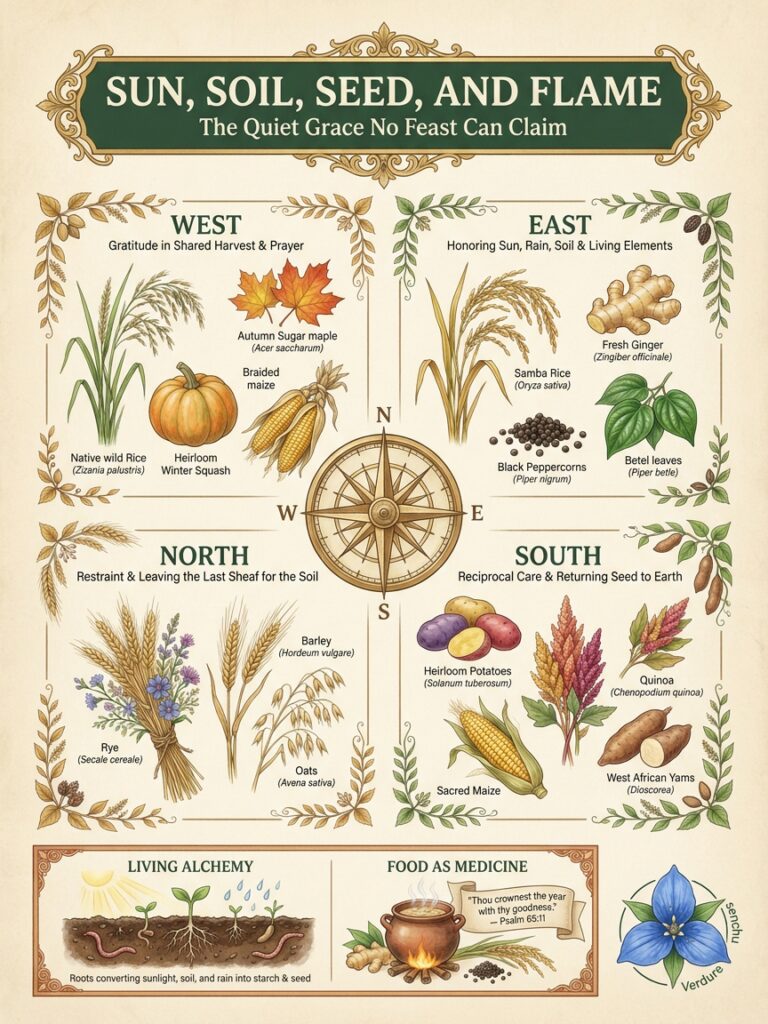
- East: Where the sun first rises, gratitude ascends straight from the living elements—where Tamil Nadu’s Thai Pongal boils new rice over open flame in thanks to Sun, Rain, Soil, Cattle, and the toiling farmer; Japan’s ancient Niiname-sai offers first grain in honor of earth and labor; Korea’s Chuseok breaks steamed rice cakes (songpyeon) beneath a full autumn moon; Bali and Sabah (Tadau Kaamatan) dress emerald paddies in woven palm; Persia’s Mehregan crowns autumn tables with ruby pomegranates and walnuts; and Arab oases and groves gather for the date harvest (Al-Makhraf) and the pressing of first golden olive oil.
- South: Across the sun-drenched plains and equatorial groves of the Southern Hemisphere, gratitude beats in rhythm with the rain and root—where Ghana’s Ga people celebrate Homowo at the lifting of new yams and millet, scattering steamed cornmeal (kpokpoi) in communal remembrance of survival past famine; Nigeria’s Igbo communities honor the sacred New Yam Festival (Iri Ji), offering the season’s first tubers before a single household tastes the crop; and across the high Andes of Peru and Bolivia, Indigenous growers gather for Inti Raymi and Pachamama earth-offerings, returning roasted maize, potatoes, and coca leaves to the mountain soil that sustained them.
- West: Across the Americas and the wide waters beyond, harvest thanks weaves survival with shared table fellowship—where Canada gathers in October’s crisp air to remember sixteenth-century northern landings and early autumn abundance; Mexico’s rural villages bless dried corn cobs and native squash at Fiesta de la Cosecha altars; Liberia fills November churches with baskets of cassava, plantains, and harvested fruit auctioned in communal song carried home across the Atlantic; and even on distant Norfolk Island, nineteenth-century whaling ships left behind a quiet South Pacific tradition of decorating chapel pews with island bananas, sugarcane, and yams.
- North: Beneath Europe’s shortening autumn skies, rural humility turns the end of the growing season into quiet reverence—where the Netherlands observes Dankdag voor Gewas en Arbeid (Thanksgiving Day for Crop and Labor), pairing spring planting prayers with autumn gratitude for every furrow turned; Germany and Austria’s Erntedankfest braids ripened stalks of wheat and rye into intricate harvest crowns (Erntekrone) laid beside orchard apples and fresh loaves; and Britain’s historic Harvest Home gathers village parishes to share the final sheaf of grain and sing thanks for the hands that brought the fields safely in before winter frost.
.
Across every latitude, one truth endures: before a single flame is lit beneath a cooking pot, human life depends upon the plow and the living earth. Thiruvalluvar captured this universal law in the Tirukkural (Chapter 104, Uzhavu — Agriculture, Kural 1031):
“சுழன்றும்ஏர்ப் பின்னது உலகம் அதனால் / உழந்தும் உழவே தலை”
(“Though the world spins through many pursuits, it follows behind the plow; therefore, despite all its toil, agriculture remains the highest of all callings.”)
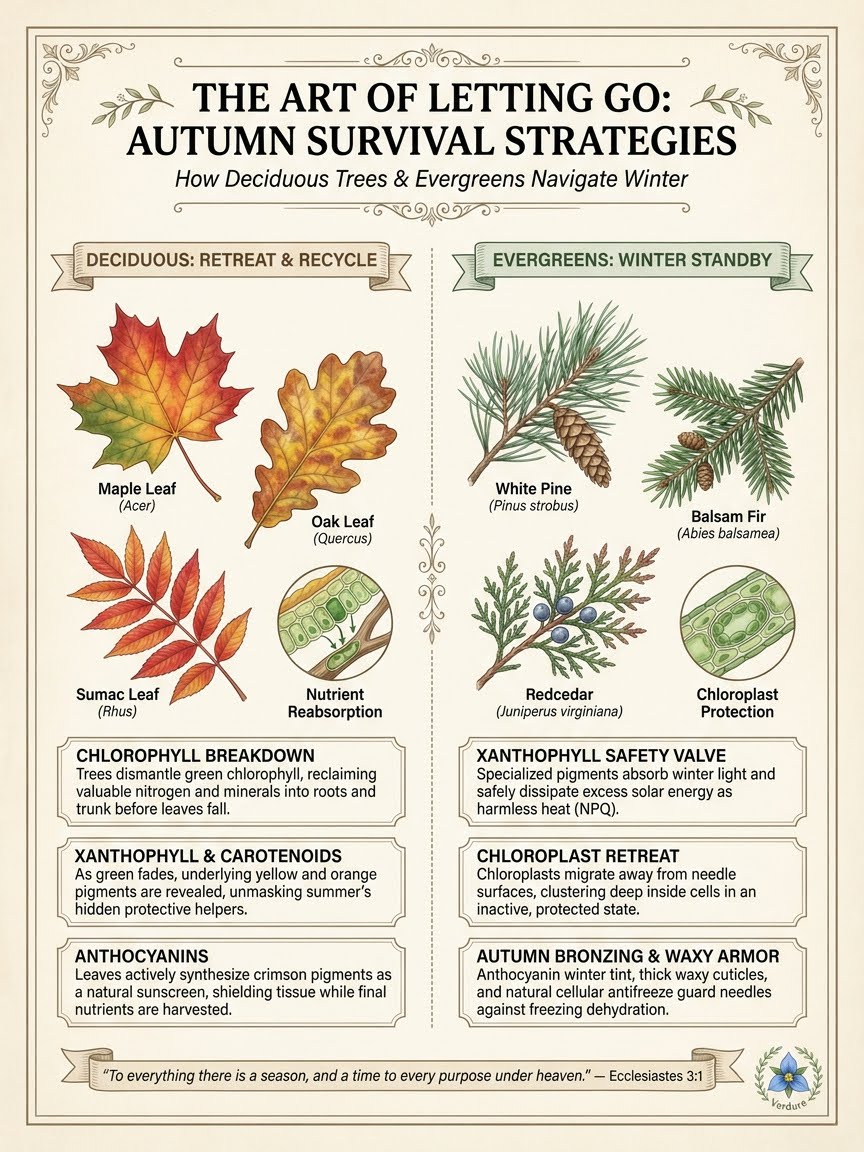
Walk into a garden at the end of November, and you can watch that quiet law at work. On the surface, the season looks like a surrender—tall stems have turned brittle, seed heads rattle softly in the breeze, and fallen leaves lay their gold and russet back onto the ground. Yet beneath that stillness, creation has already completed its alchemy: every drop of rain, microscopic soil mineral, and hour of solar warmth (Thee) has been gathered through photosynthesis and sealed into starch, oil, and seed. Even as earthworms and soil microbes begin breaking yesterday’s fallen foliage down into tomorrow’s humus, those ripened grains and roots carry the stored memory of an entire season’s sun and soil straight to our kitchen doors.
When that harvest reaches the stove, classical Tamil Siddha wisdom captures its purpose in a single axiom: “Unave Marunthu, Marunthe Unavu” (உணவே மருந்து, மருந்தே உணவு) — “Food itself is medicine, and medicine itself is food.” Every grain, leaf, and spice carries the condensed sunlight and mineral imprint of the five elements (Mann, Neer, Thee, Kaatru, and Agaayam) into our tissues—healing only when received with restraint rather than excess. Grounding parboiled Samba rice to steady Vali, a pinch of dry ginger (Sukku) or black pepper (Milagu) to protect digestive fire (Pachaka Thee), and a fragrant betel leaf (Vetrilai) after a meal turn an ordinary table into quiet, restorative care. As Thiruvalluvar reminds us in Tirukkural (Chapter 95, Marundhu, Kural 942):
“மருந்தென வேண்டாவாம் யாக்கைக்கு அருந்தியது / அற்றது போற்றி உணின்”
(“No medicine is needed for the body if one eats with discernment, ensuring that what was eaten before has been fully digested.”)
This is what true thanksgiving has always been: lifting our eyes from the table to proclaim the Creator’s masterwork—this breathing earth, its hidden chemistry, and all its intricate beauty fashioned for our sake—and receiving every breath and humble meal with restraint and wonder. As Scripture reminds us in the Psalms: “Thou crownest the year with thy goodness; and thy paths drop fatness” (Psalm 65:11). Every harvest across East, West, North, and South is a living testimony that our lives are nourished, sustained, and crowned by a goodness far older and deeper than our own hands.