
When we walk through a vibrant garden, it is easy to assume that flowers put on their spectacular displays just for our viewing pleasure. But every splash of color, burst of fragrance, and droplet of sweet nectar is actually a calculated invitation.
To reproduce, flowering plants must transfer pollen from one bloom to another. Because they cannot move, they rely on a dedicated workforce of bees, butterflies, moths, and birds.
But what is the ultimate magnetic pull that convinces these creatures to land? Is it the intoxicating fragrance, the vivid color, or the flavor of the reward?
The short answer: Fragrance and color are the primary invitations, while flavor is the reward that guarantees return business.
To manage their metabolic energy efficiently, plants rarely invest heavily in both intense fragrance and vivid color simultaneously; they typically optimize one or the other to attract a specific target audience.
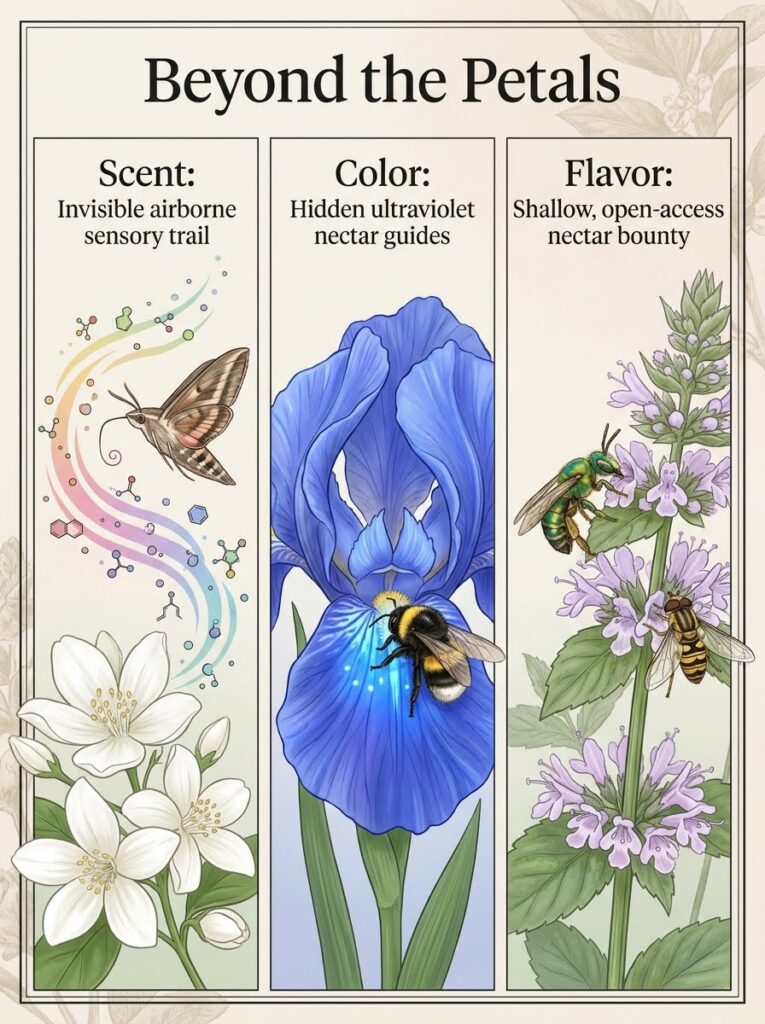
Scent: The Long–Distance Chemical Trail
Scent acts as an invisible, floating highway. Volatile organic compounds drift on the wind, allowing pollinators to detect a flower from over a kilometer away and track the scent straight to the source.
- The Daytime Crew: Honeybees navigate daylight hours by tracking light, sweet, fresh, or fruity aromas.
- The Night Shift: Because vision is limited in the dark, nocturnal pollinators like moths and bats rely entirely on heavy, musky, or deeply sugary perfumes that peak precisely after sunset.
- The Rule Breakers: Some flowers want to attract flies or beetles, so they mimic the pungent odors of decaying protein, dung, or rotting meat to trick these scavengers into dropping by.
Real-World Connection: Ever Been Chased by a Confused Bee?
Have you ever put on your favorite jasmine or rose perfume, stepped outdoors, and found yourself being relentlessly followed by a honeybee? You aren’t imagining things—you have accidentally turned yourself into a walking advertisement!Perfumes use the exact same volatile organic compounds that flowers use to advertise food. Because a bee’s sense of smell is thousands of times sharper than ours, it tracks your scent trail expecting a massive sugary payday. Once it arrives, its brain hits a confusing roadblock: your perfume says “jackpot,” but your lack of petals and hidden ultraviolet markings say “mismatch.” It buzzes around you frantically simply trying to solve this botanical puzzle! To drop off their radar on outdoor days, try switching to herbal aromas like peppermint or wearing red—a color bees are completely blind to.
Color: The Visual Landing Target
Once a pollinator gets close enough to see the garden, color takes over like a neon landing sign. However, different pollinators see the world through completely different visual spectrums.
- Honeybees: Gravitate heavily toward blue, purple, violet, yellow, and white. While bees are completely blind to the color red, they are incredibly sensitive to ultraviolet (UV) light. Many blue and violet petals—like Wild Irises, Forget-Me-Nots, and Texas Bluebonnets—feature hidden UV “nectar guides.” These function like glowing, high-contrast landing strips invisible to humans, mapping out precise paths that direct the bee straight to the nectar pool.To guarantee a continuous food line from early spring frost through winter, honeybees require a balanced, multi-seasonal rotation of these highly visible target colors:
-
- The Spring Awakenings: Foragers rely on Agarita (Mahonia trifoliolata), an evergreen shrub producing early clusters of bright yellow blossoms. They pair this with the iconic Texas Bluebonnet (Lupinus texensis), which flashes UV-active white banner spots against rich blue spikes, alongside the high-energy white umbels of Texas Milkweed (Asclepias texana).
- The High-Heat Summer Matrix: In the peak of summer, bees lock onto the massive golden faces of the Common Sunflower (Helianthus annuus), which feature dark, hidden UV bullseye rings. They also frequent the dense lavender-blue floral spikes of Anise Hyssop (Agastache foeniculum) and the aromatic, nectar-rich pale white spikes of Holy Basil / Tulsi (Ocimum sanctum).
- The Late-Season Emergency Pantry: As autumn fades into winter, bees sustain themselves using Golden Yarrow (Achillea millefolium), which provides flat-topped golden landing pads. This is paired with solid carpets of starry, blue-violet Aromatic Aster (Symphyotrichum oblongifolium) blossoms and the honey-scented, highly cold-tolerant white clusters of Sweet Alyssum (Lobularia maritima).
- Hummingbirds: Drawn primarily to bright, high-contrast, fiery shades like crimson red, vivid orange, hot pink, and bright yellow. Hummingbirds possess exceptional color vision but virtually no sense of smell, meaning red tubular flowers rely almost exclusively on visual allure.However, a hummingbird’s true boss is ultimately caloric payback and anatomical fit. They readily bypass red for deep blue Salvias with long tubular bells matching their narrow beaks, or clustered white Drumstick tree (Moringa) blossoms that pump out immense nectar volumes. When you see them probing non-floral conifers like the Arizona Cypress, they are actually hunting for vital soft-bodied insect protein!
Flavor: The Ultimate Customer Retention Plan
Flavor does not typically lure a pollinator from a distance, but it dictates everything that happens once they arrive. In the natural world, “flavor” comes down to sugary nectar (energy) and nutrient-dense pollen (protein).
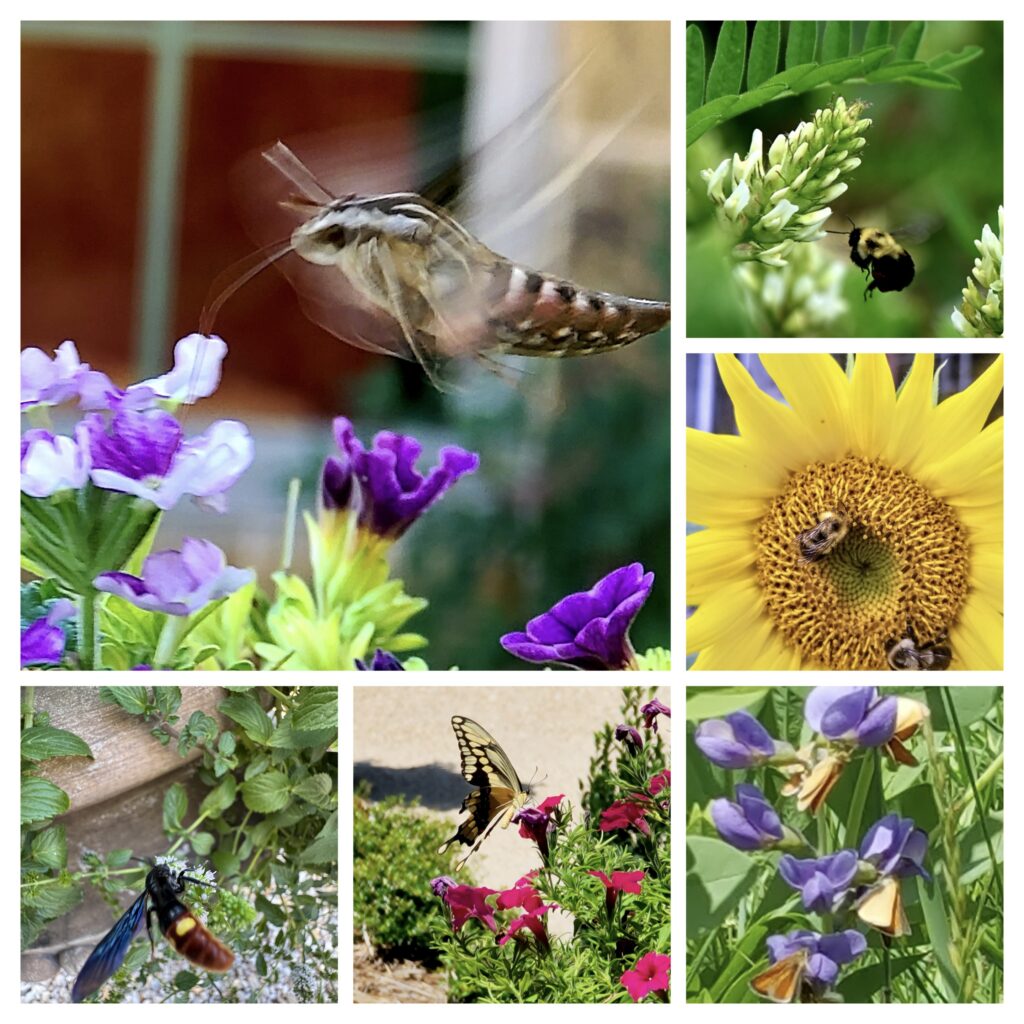
If a flower delivers a high-quality, delicious reward, the pollinator forms a powerful sensory association. This creates what botanists call “floral fidelity”—a behavior where an insect exclusively visits one plant species during a foraging trip. Without a flavorful reward, the invitation of color and scent would quickly lose its power.
Pro-Tip for Gardeners: Plant Mint for the “Underdog” Pollinators!
Want to see an immediate explosion of insect diversity in your garden? Let a patch of mint go to flower. While many popular flowers hide their nectar at the bottom of deep, narrow tubes reserved for elite specialists, mint blossoms do the exact opposite. Their tiny flowers are incredibly shallow, effectively creating an open-access buffet. This easy entry draws a fascinating, chaotic crowd of unsung heroes—like tiny metallic solitary sweat bees, beneficial hoverflies, and miniature predatory wasps that help naturally control garden pests.
This brilliant symphony of attraction and reward honors the genius of the Creator. It beautifully illustrates Psalm 104:24: “How many are your works, Lord! In wisdom you made them all; the earth is full of your creatures.”Every petal, scent, and pollinator stands as a tiny, vibrant masterpiece celebrating divine design.